Dungeon Crawler Carl: the guy in the heart boxers, explained
Coast Guard vet. Royal bodyguard. Bomb problem. Why Carl is the moral spine of the crawl, how Jeff Hays built the voice, and what Compensated Anarchist is actually saying under the explosions.
The series is named after him. The party is not. That tension is the whole character.
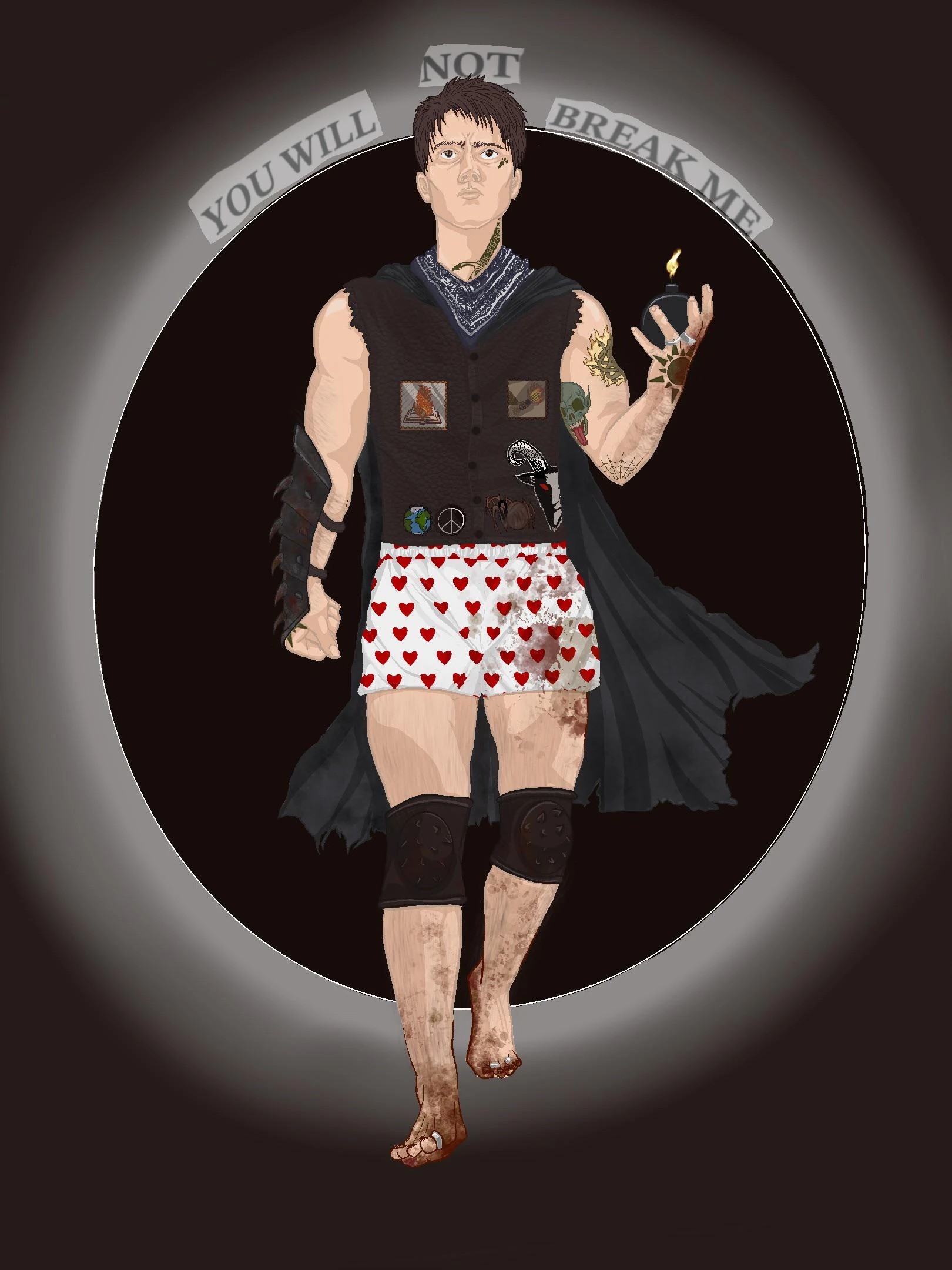
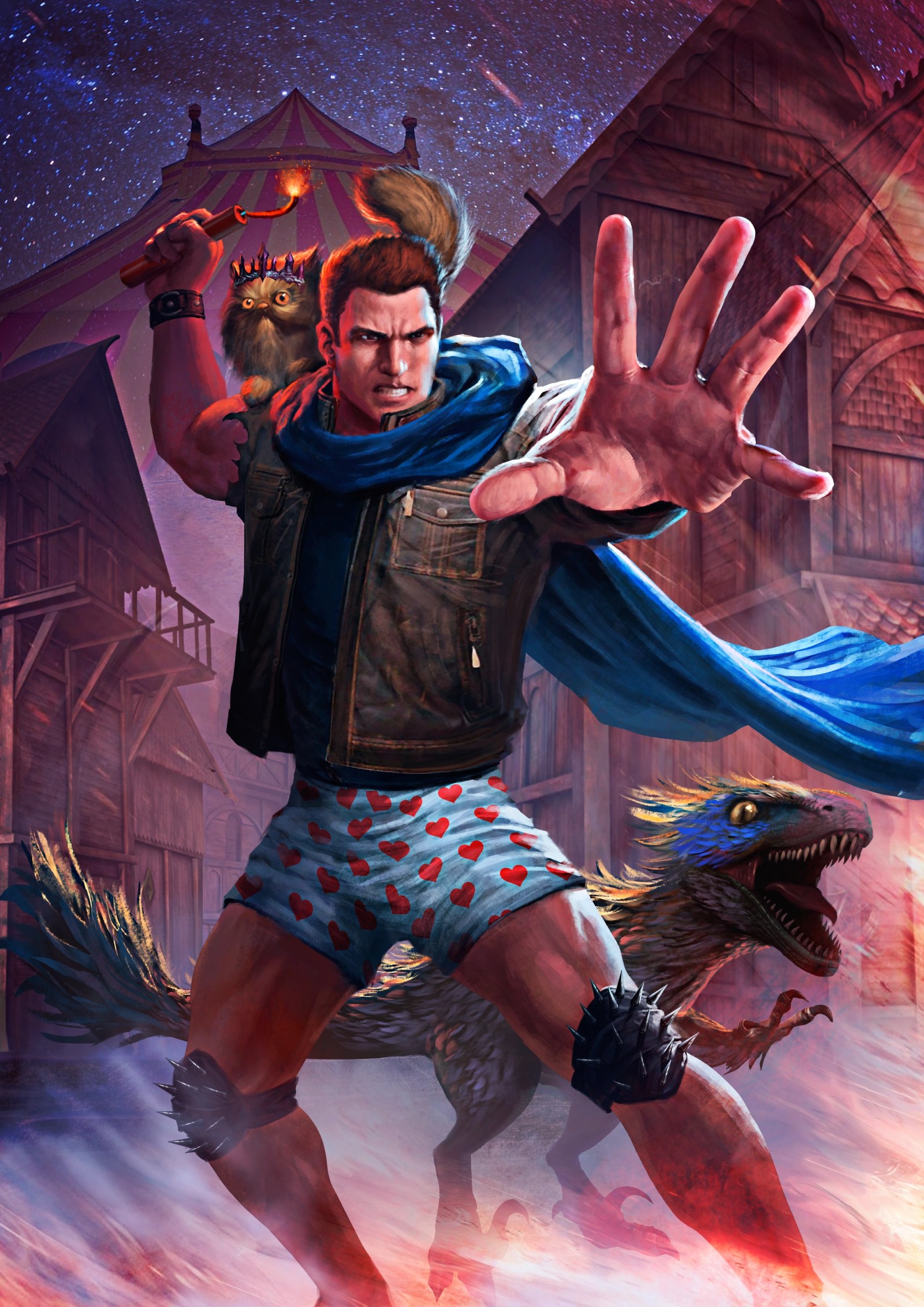
Dungeon Crawler Carl sells the meme first: a tall disaster in enchanted heart-print boxers and Crocs, dragging a show cat through a televised meat grinder. Under the meme is a Coast Guard vet who keeps making expensive moral choices inside a system built to punish them. Carl is not cool. Carl is stubborn. Stubborn is how you stay a person when the galaxy is trying to turn you into a clip.
This is his deep dive. If you only want the spoiler-free onboarding, use the start here guide first. For the cat who stole the broadcast, read the Princess Donut deep dive. Below the soft stuff there is a marked spoiler wall for race, class, and later-floor territory.
Goddammit, Donut.
Job before
Coast Guard
Role
Moral spine
Uniform
Heart boxers
Spoiler wall
Labeled below
Who he is before the joke lands
Before Earth becomes a game show, Carl is Bea’s boyfriend: Coast Guard background, marine-tech hands, the kind of competent man who still somehow loses arguments with a Persian. He is not a chosen one. He is furniture with a pulse until the morning the buildings come down.
He ends up outside because Donut got out. Underwear. Crocs. No armor fantasy. The crawl does not draft a hero. It drafts a guy who chased a cat and refused to die on schedule. That origin never stops mattering. Every later floor is still arguing with that first stupid, loyal decision.
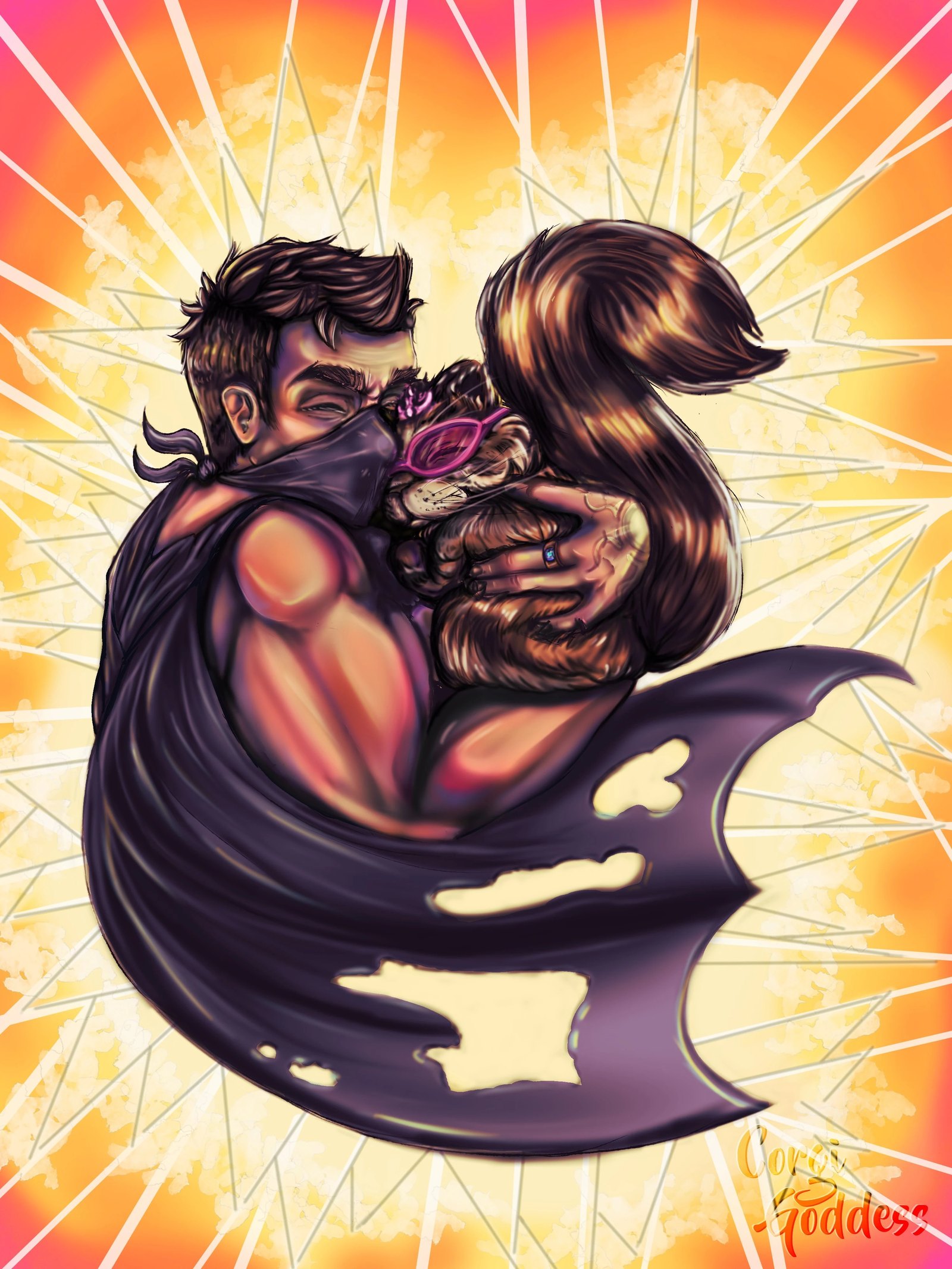
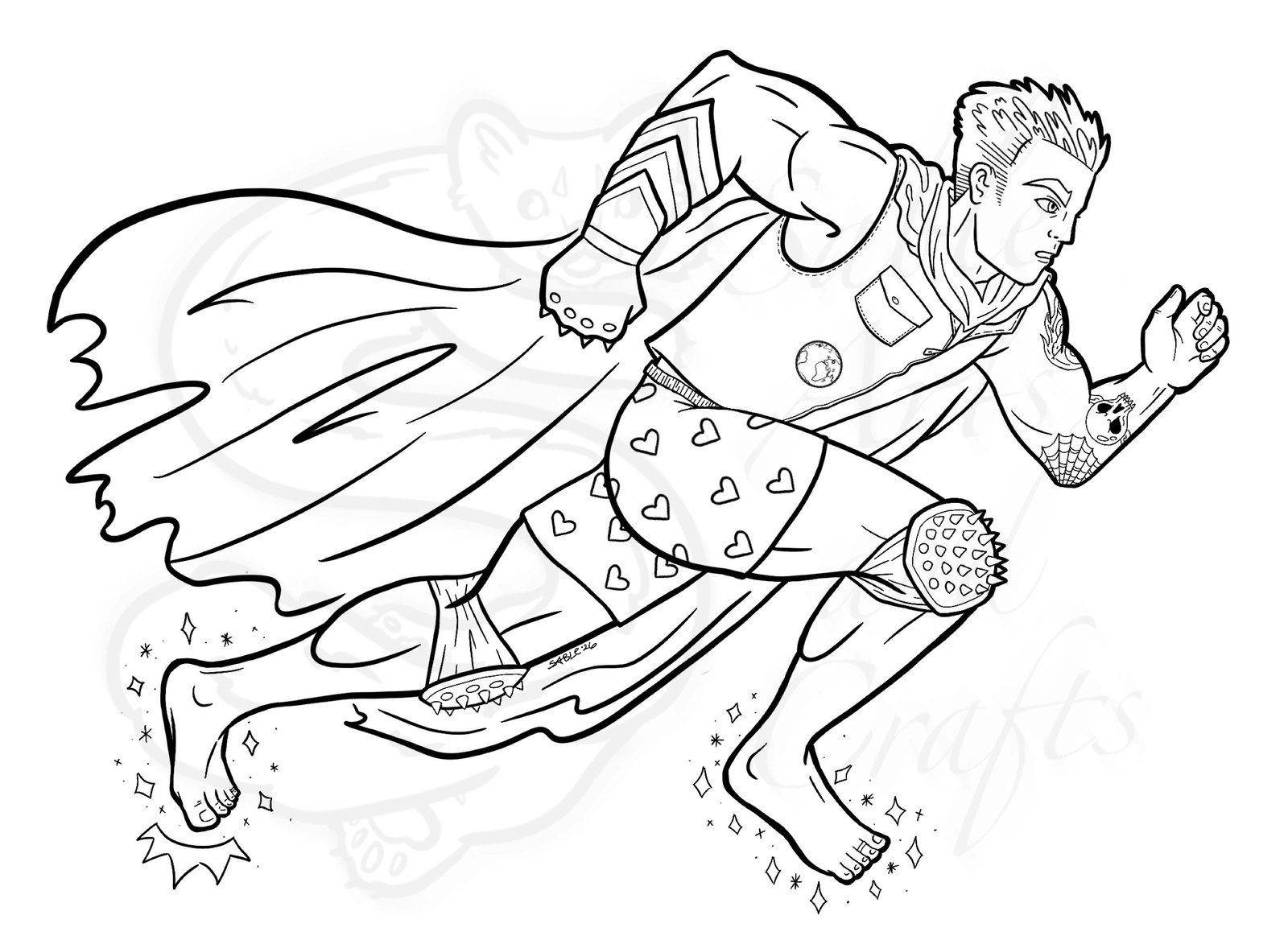
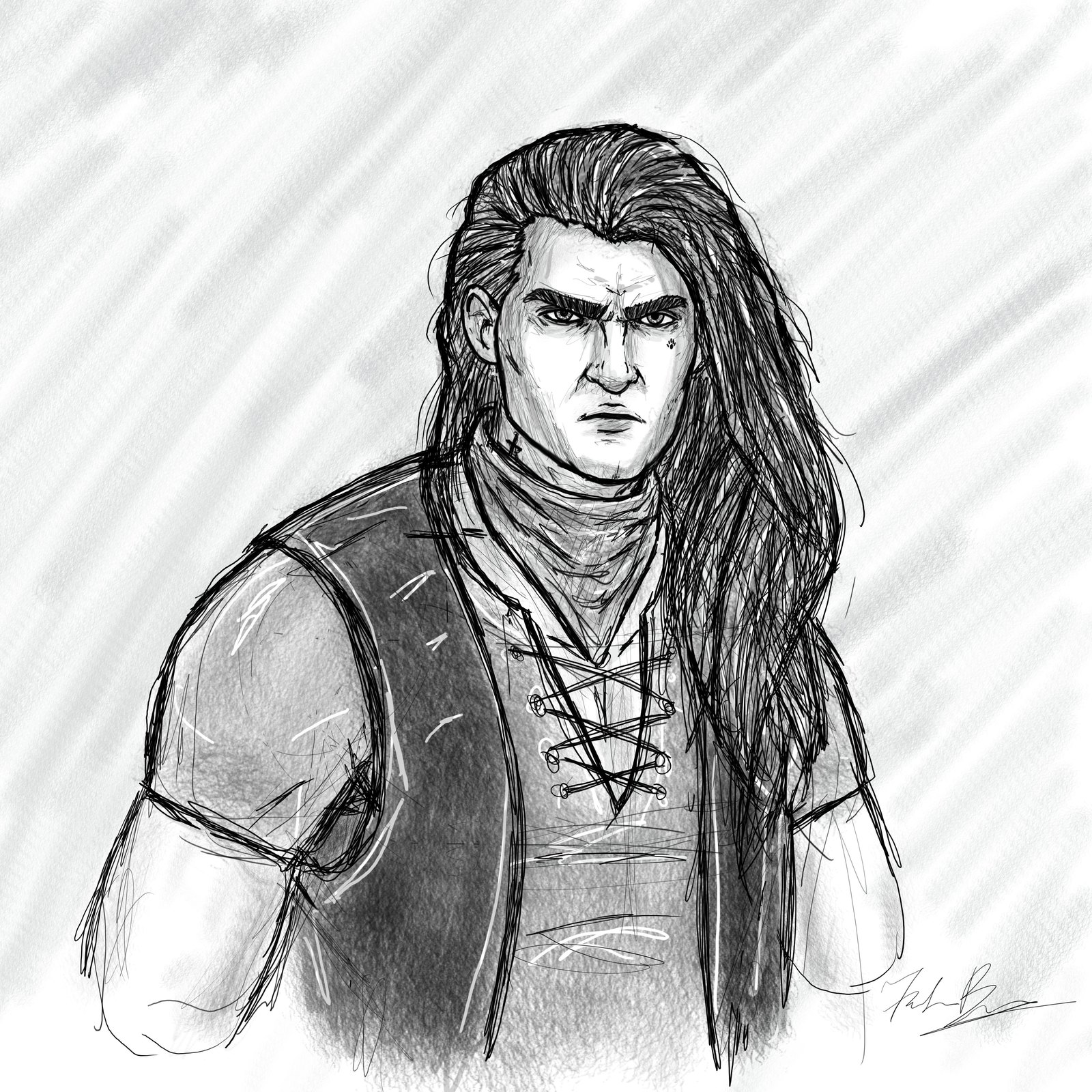
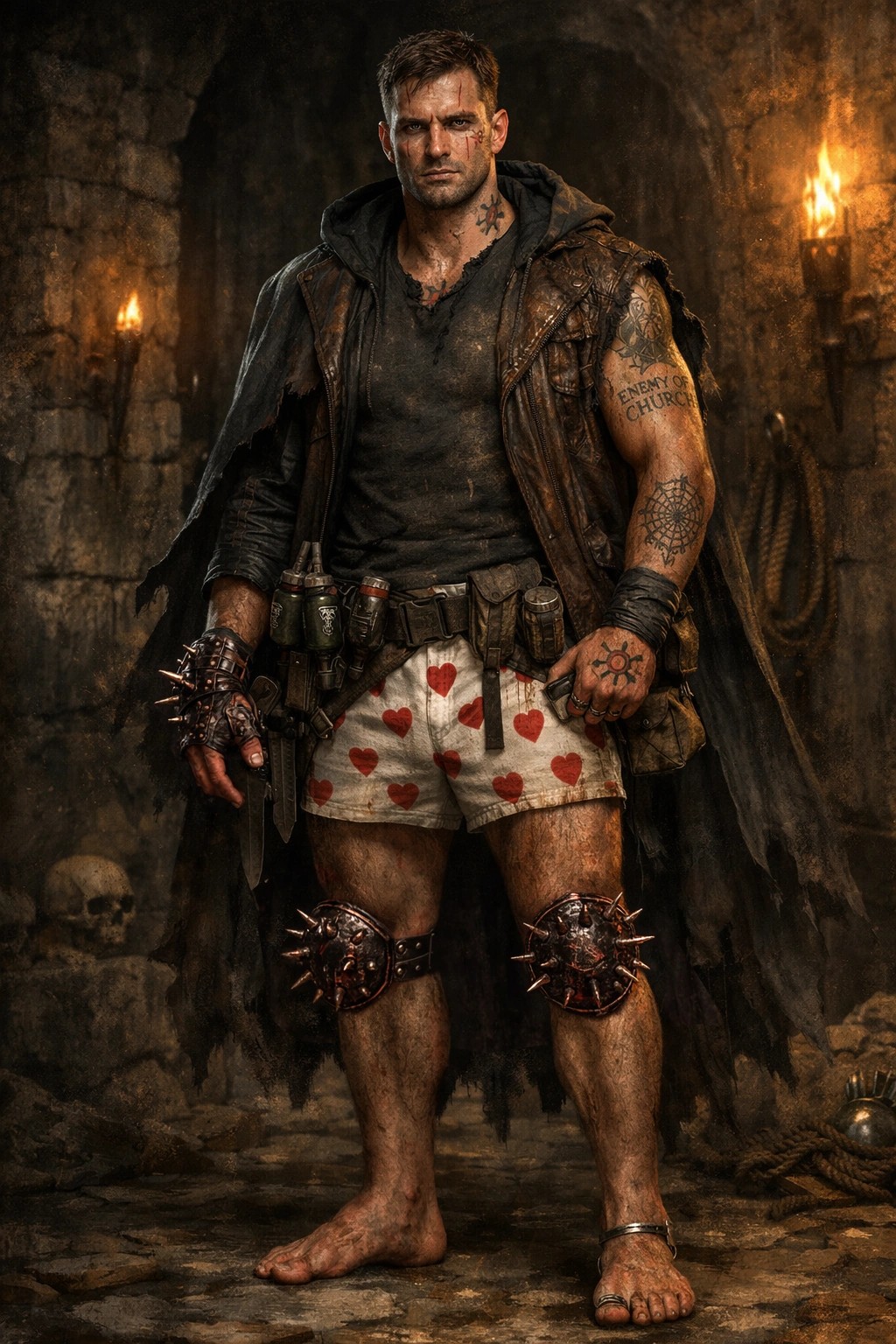
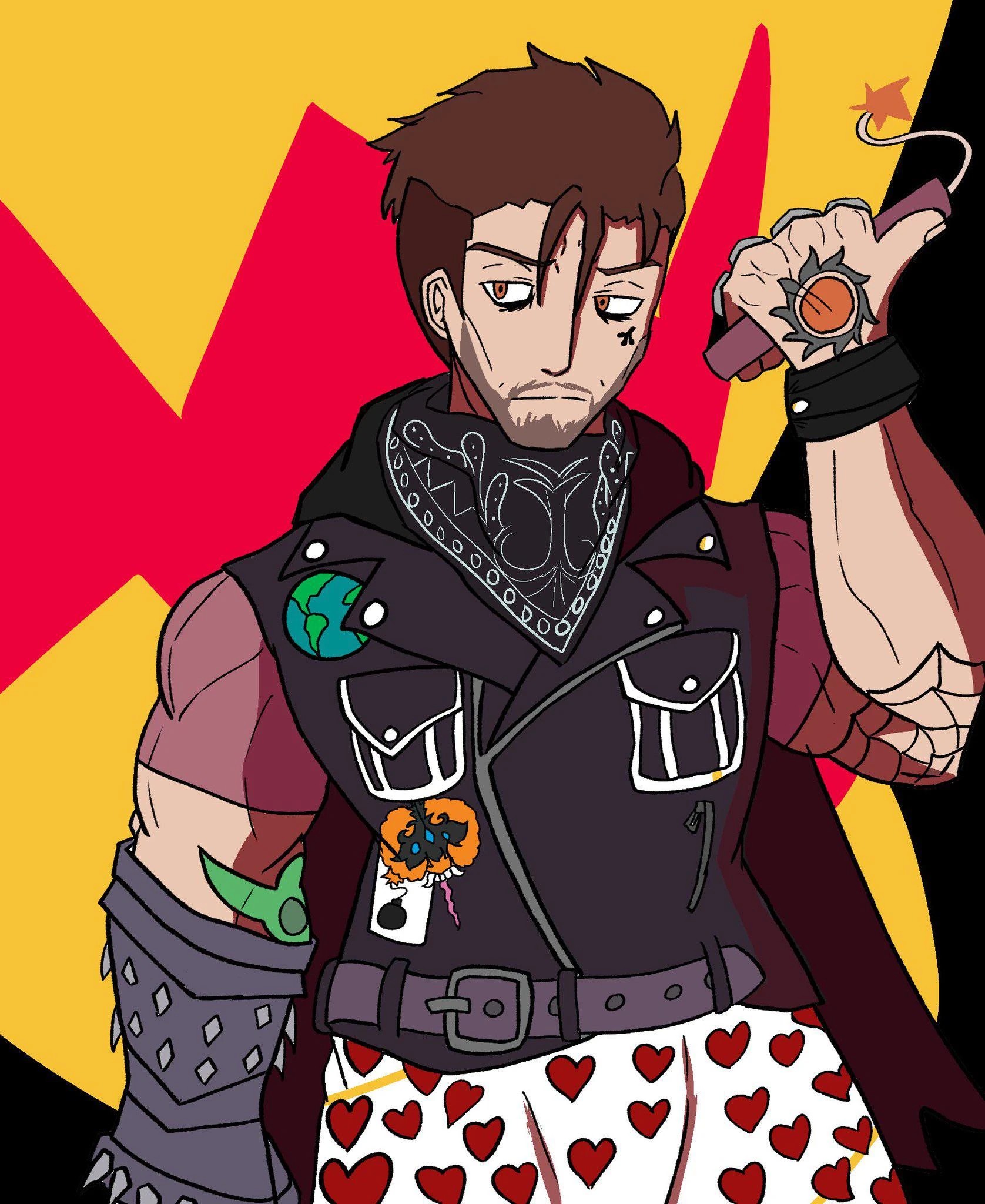
Carl as the barefoot menace: heart boxers as permanent costume, not a temporary gag.Fan art by CorgiGoddess. Tall, tired, still choosing the hard option.
The setup that makes him indispensable
Inside the dungeon, Carl becomes the party’s violence budget and its conscience at the same time. He improvises. He swears. He builds ugly solutions that work. Donut renames the party around herself and demotes him to royal bodyguard. Readers laugh. Then they notice he accepted the job description without surrendering the moral veto.
The crawl wants performers. Carl keeps trying to be a rescuer who happens to be on camera. That mismatch is the engine. When he blows something up, it is funny. When he refuses to become only the explosion, it is the reason the books hurt.
Book 2 Ace art by Will Staehle. The show goes live. The boxers stay.
Why the underwear guy works
A lot of progression fantasy turns the protagonist into a spreadsheet with abs. Carl stays embarrassing on purpose. The heart boxers are not a one-chapter gag. They are a permanent refusal to look like the product the sponsors ordered. He gets stronger. He does not get cooler. That is rarer than another legendary sword.
He is also the series’ cleanest argument against nihilism cosplay. The dungeon rewards cruelty as content. Carl keeps choosing costly decency anyway, then invents a bomb to pay the invoice. The humor is filthy. The stakes are not. Every gag sits next to a body count, and Dinniman never pretends those two things cancel out.
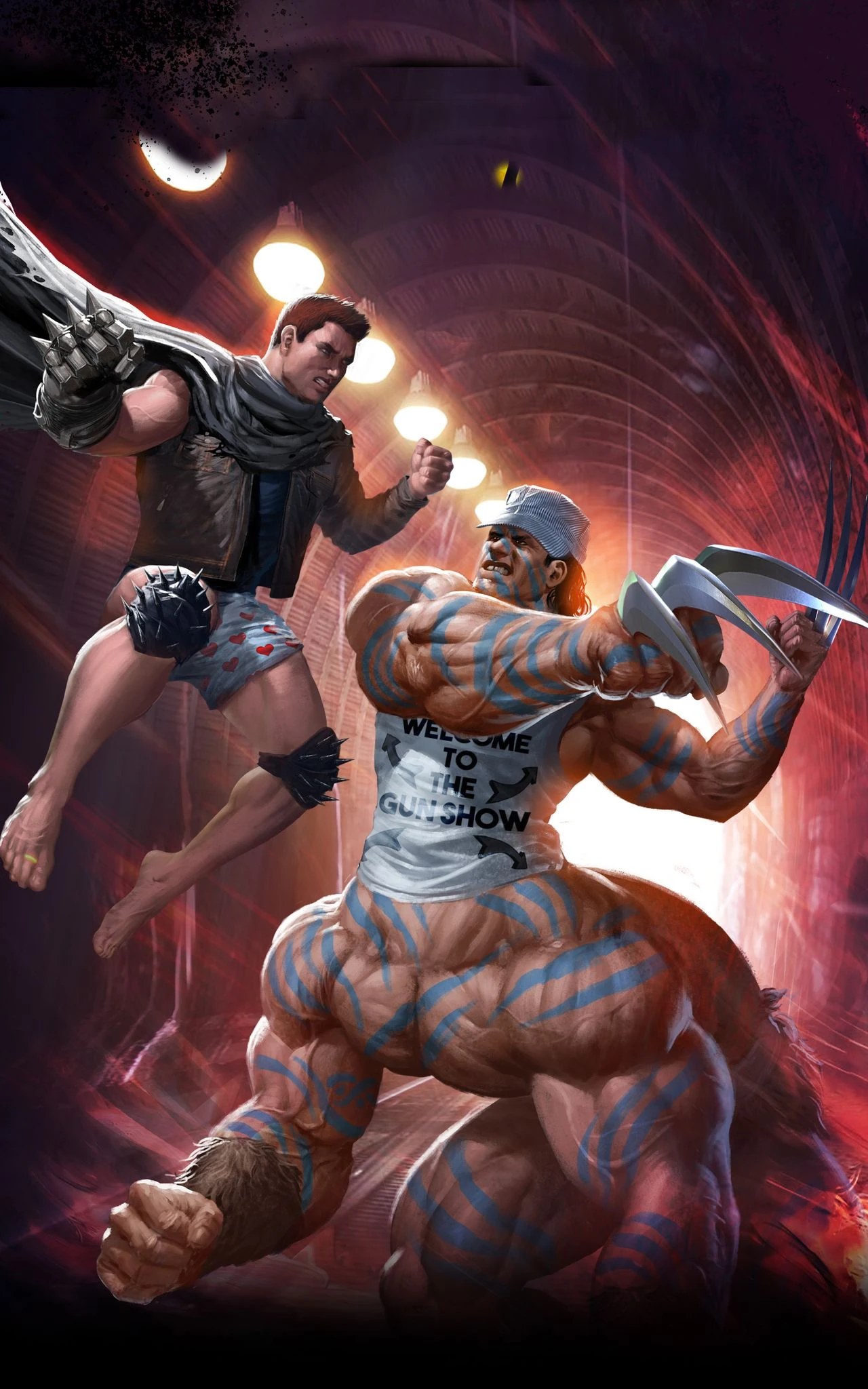
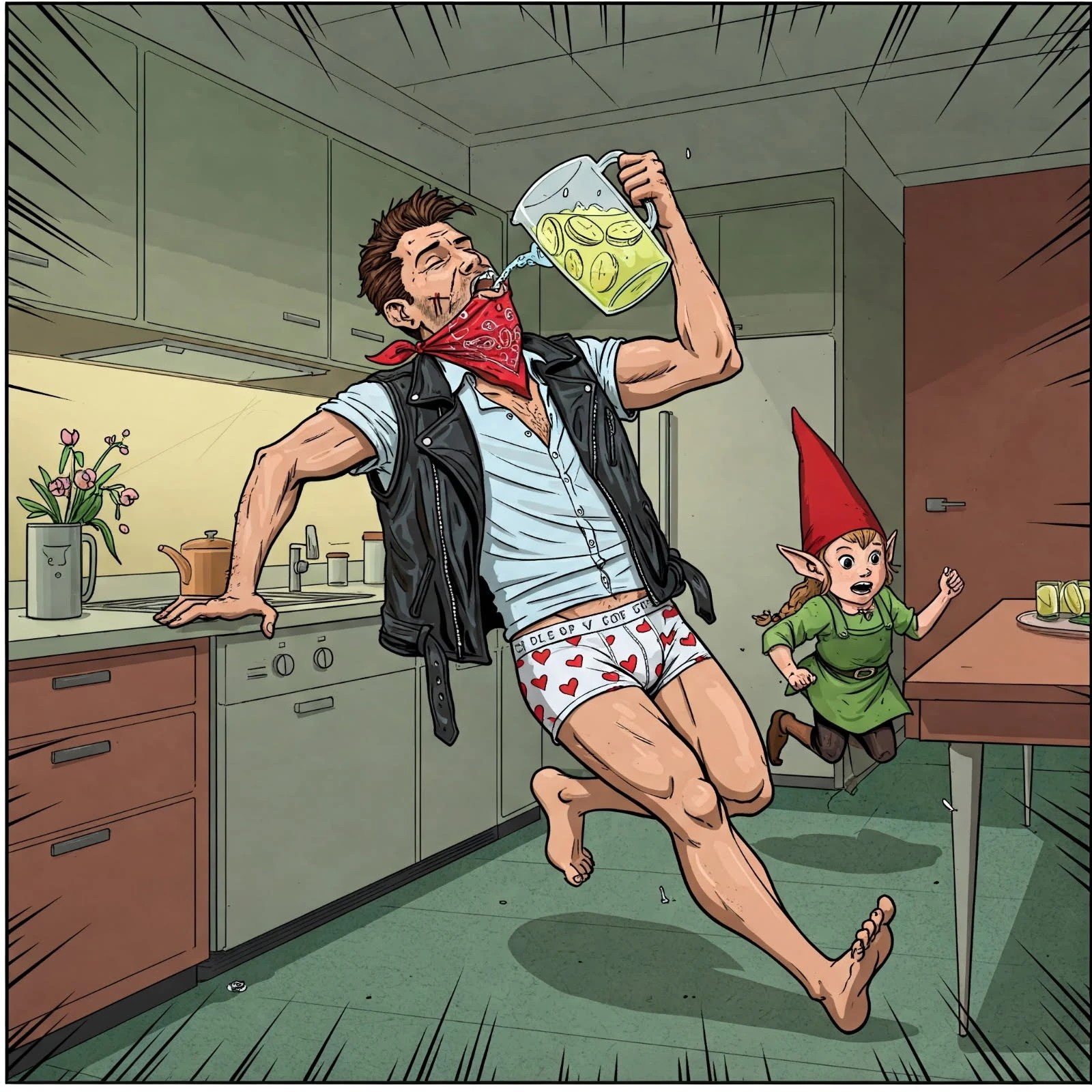
Carl running from problems he made. The comedy is the cost accounting.
Engineering and spite as a combat style.
The voice problem, solved
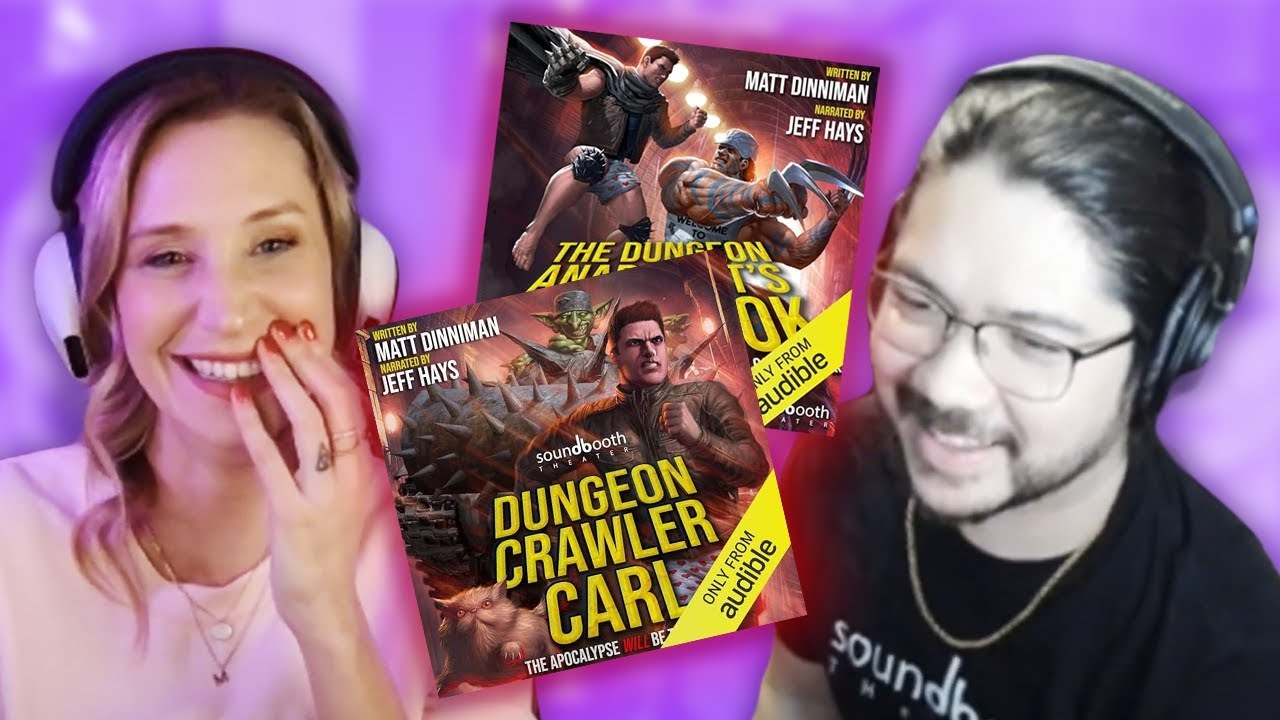
On the page, Carl already sounds tired and dangerous. In audio, he becomes a cultural event. Jeff Hays narrates the Soundbooth Theater editions and performs basically the whole cast. Carl started as a Patrick Warburton instinct: big, chill, gravel. Then the character got heavier, and the voice followed. Hays has said the Warburton shadow thinned as Carl became his own exhausted animal.
That matters for the Peacock adaptation talk the same way Donut’s casting does. If Carl becomes Generic Handsome Action Lead with a random famous baritone, the adaptation misunderstood the product. Carl is a battering ram who refuses to forget he used to be a person with a cat and a bad morning.
Jeff Hays on the Carl voice: Warburton start, heavier finish.
Exclusive interview with Jeff Hays on voicing Dungeon Crawler CarlWatch on YouTube
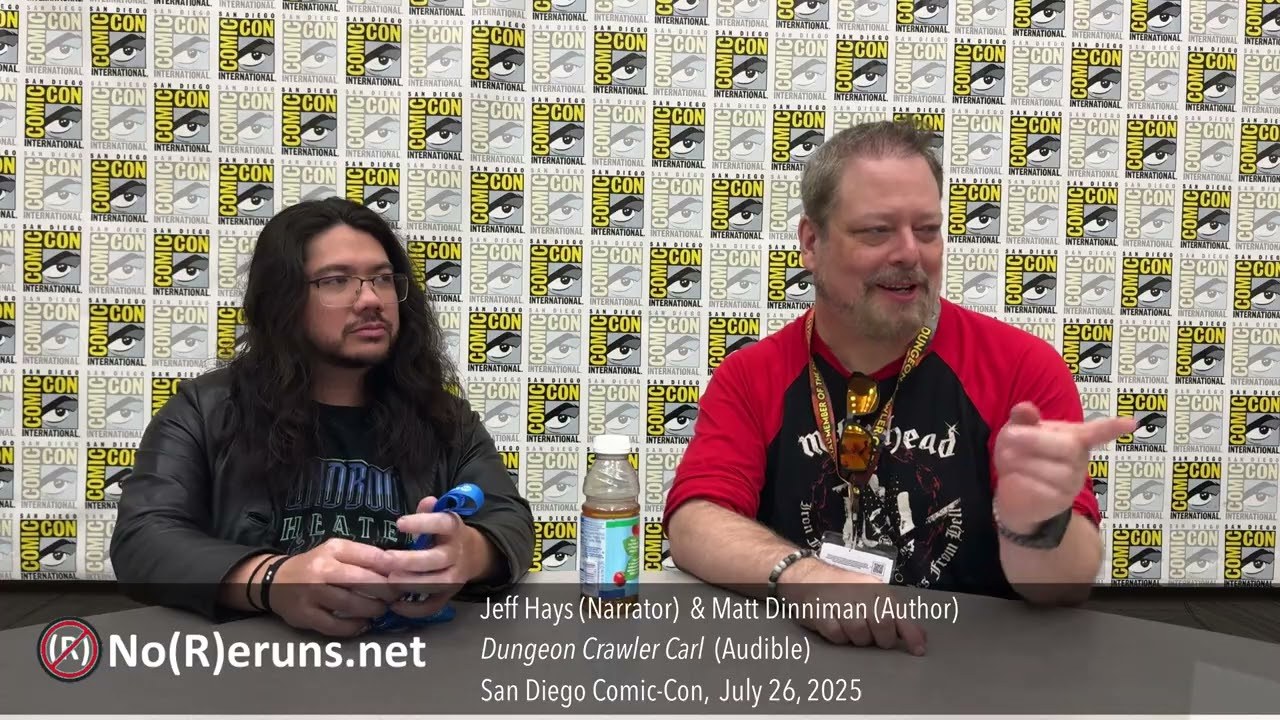
Author and narrator explaining why the booth stuck.
Dungeon Crawler Carl Q&A with Matt Dinniman and Jeff Hays at SDCC 2025Watch on YouTube
He is not the joke. He is the cost of the joke.
What he does for Donut
Carl without Donut is a competent disaster with nothing to protect. Donut without Carl is a celebrity with no tank. Together they become found family under gore: he absorbs the violence, she absorbs the spotlight, and both of them keep choosing each other when the system would rather they monetize betrayal.
Their catchphrase economy is simple. Donut does something imperial. Carl says Goddammit, Donut. Readers hear exasperation. Under it is recognition. He keeps saying her name. In a story about people being turned into product, repeating someone’s name like a prayer is not nothing.
Fan art by fionnde. Bodyguard energy without borrowing the Donut gallery.
Spoiler wall
Hard spoilers start here. If you are still early in book one and want race/class selection clean, stop and come back. The rest of this piece assumes you know he is the tank, she talks, and the early floors have already cooked.
Primal, and the birth of a build
On the third floor, when the show goes fully live and crawlers lock race and class, Carl takes Primal and the unique Earth class Compensated Anarchist. The System AI pitches it as a trapmaking, bomb-making, social-media dynamo: throw a Molotov through a window, then step in front of a camera and plead for the violence to stop. That is not flavor text. That is Carl’s entire moral contradiction printed as a job title.
He is not the only strong fighter in the season. He is the only one who picks that class. The dungeon offers power fantasies that would make him cleaner, cooler, or easier to market. He picks the one that admits he is both the problem and the protest.
Book 3 Ace art by Will Staehle. The anarchist thesis gets a title.
Compensated Anarchist: the build is the theme
Monk/rogue hybrid. Dirty tactics. Explosives. Viewership as a resource. The class wants engagement the same way Donut’s Former Child Actor wants reinvention. Carl’s version of celebrity is uglier: he becomes famous for surviving loudly while trying to make the audience feel sick about cheering.
Later floors deepen the bomb toolkit and the media war without erasing the man underneath. Exact skill menus change as he descends. The meaning does not. Carl’s power fantasy is not “become the strongest number.” It is “stay dangerous enough to protect people while refusing to become only the highlight reel.”
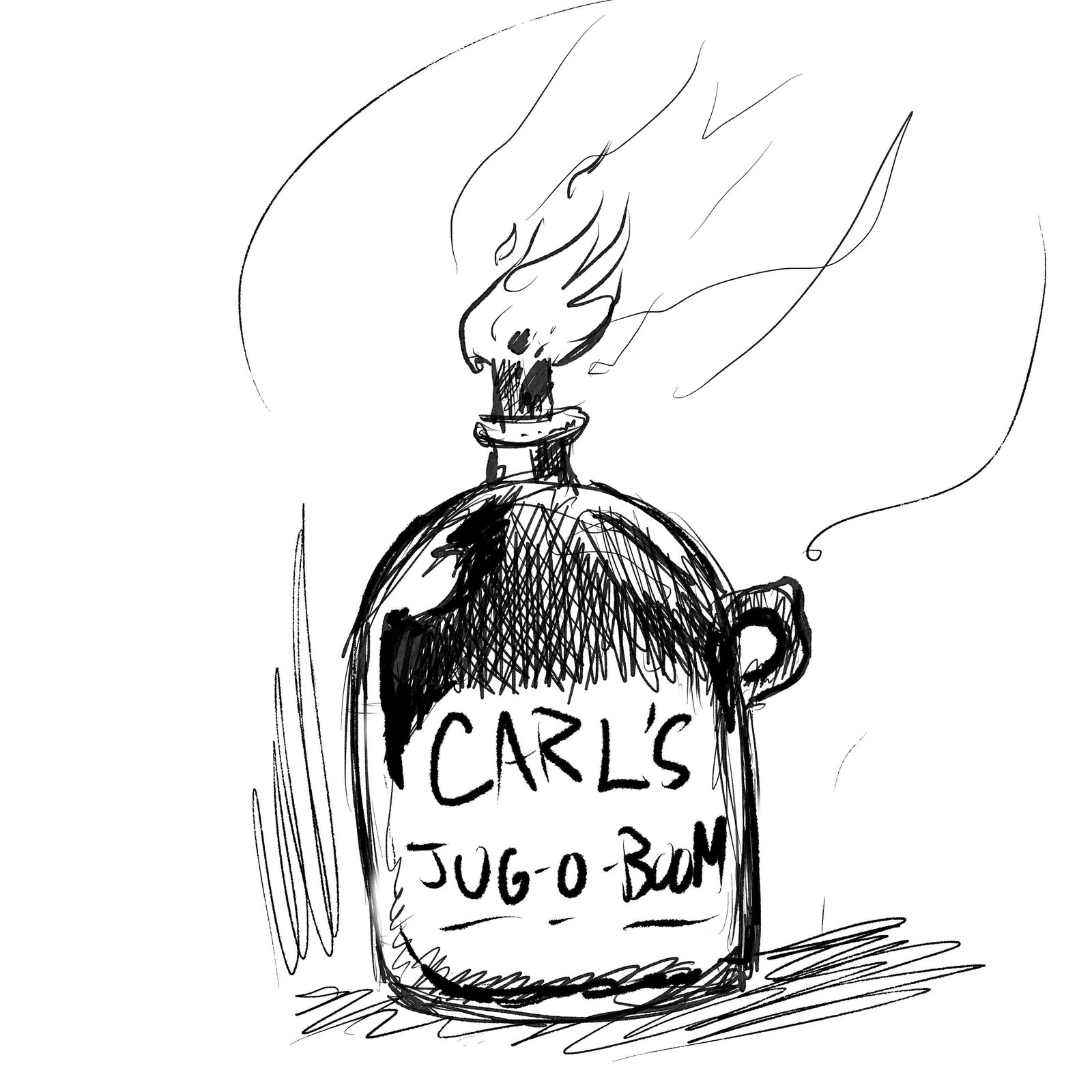
Jug O’ Boom art by Erik Wilson. The toolkit is the personality.
How he fights
Hands. Traps. Improvised demolition. Social pressure when he has to. Carl is the melee solution Donut refuses to be, and he knows the camera is part of the arena. He will punch a problem, wire a problem, or turn a problem into a broadcast incident if that is what keeps the party breathing.
Moral veto. He keeps making choices that cost loot, safety, or favor because the alternative is becoming the show’s preferred animal.
Explosives first. If a fight can be solved with engineering and spite, Carl will invent the worst correct answer.
Camera literate. He hates the audience. He still understands them. That is how you survive a ratings economy.
Protective core. When the books need you to feel the cost, they often aim the camera at who Carl is willing to bleed for.
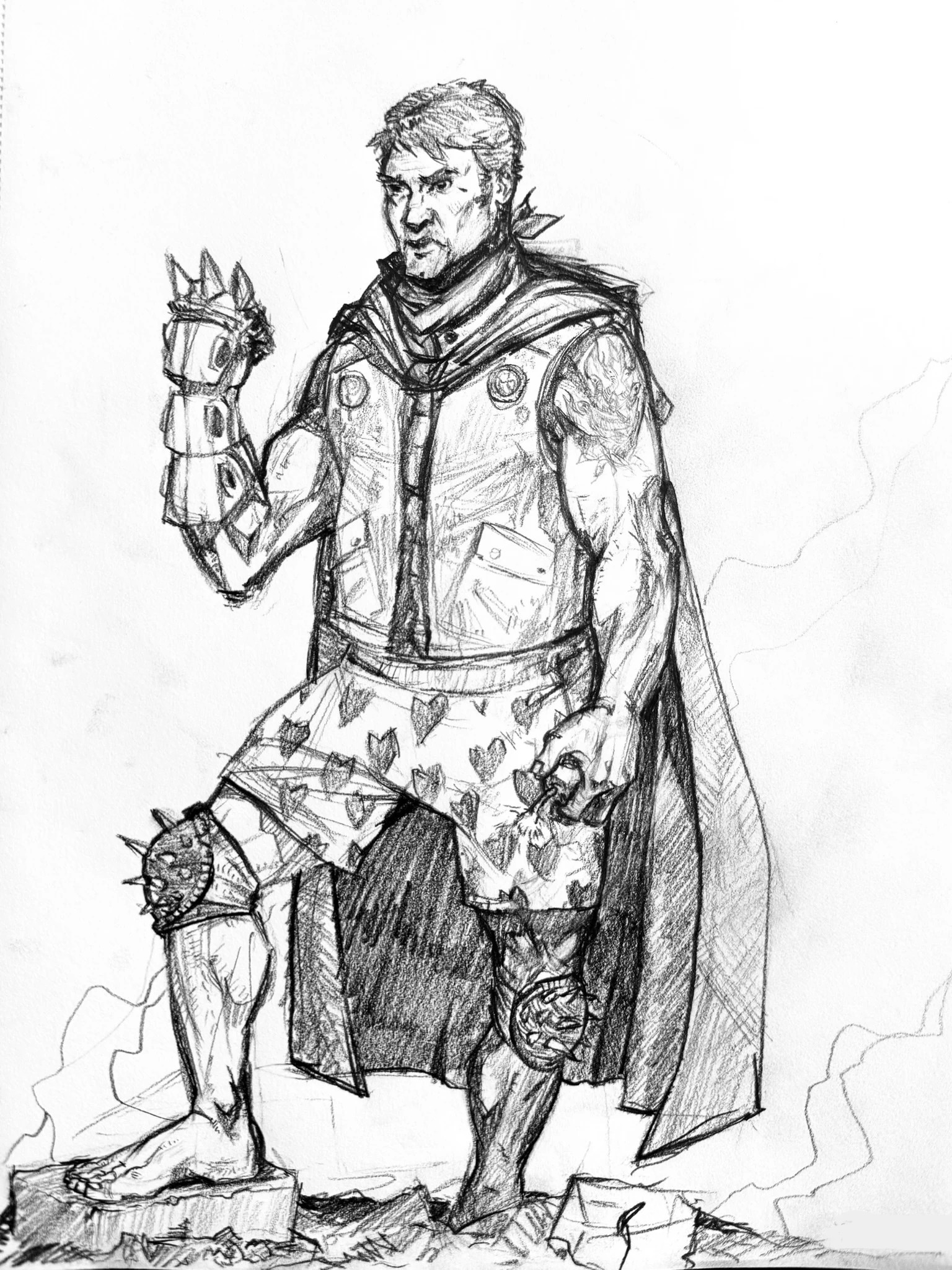
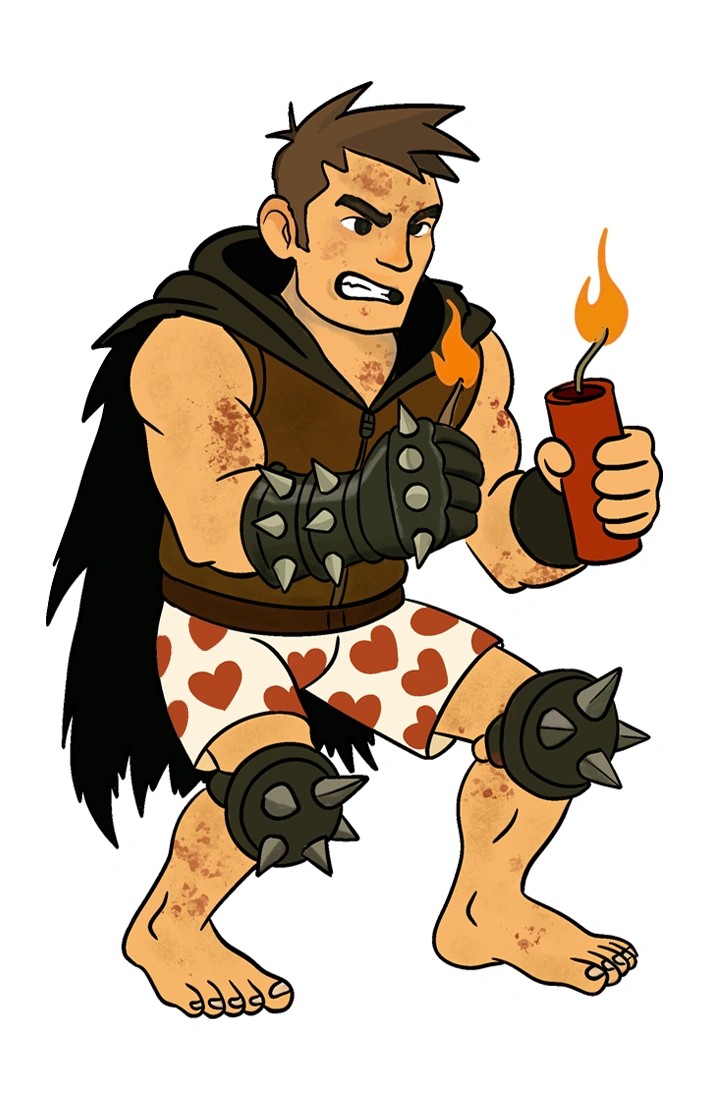
Gauntlet on. The melee half of the Compensated Anarchist bargain.
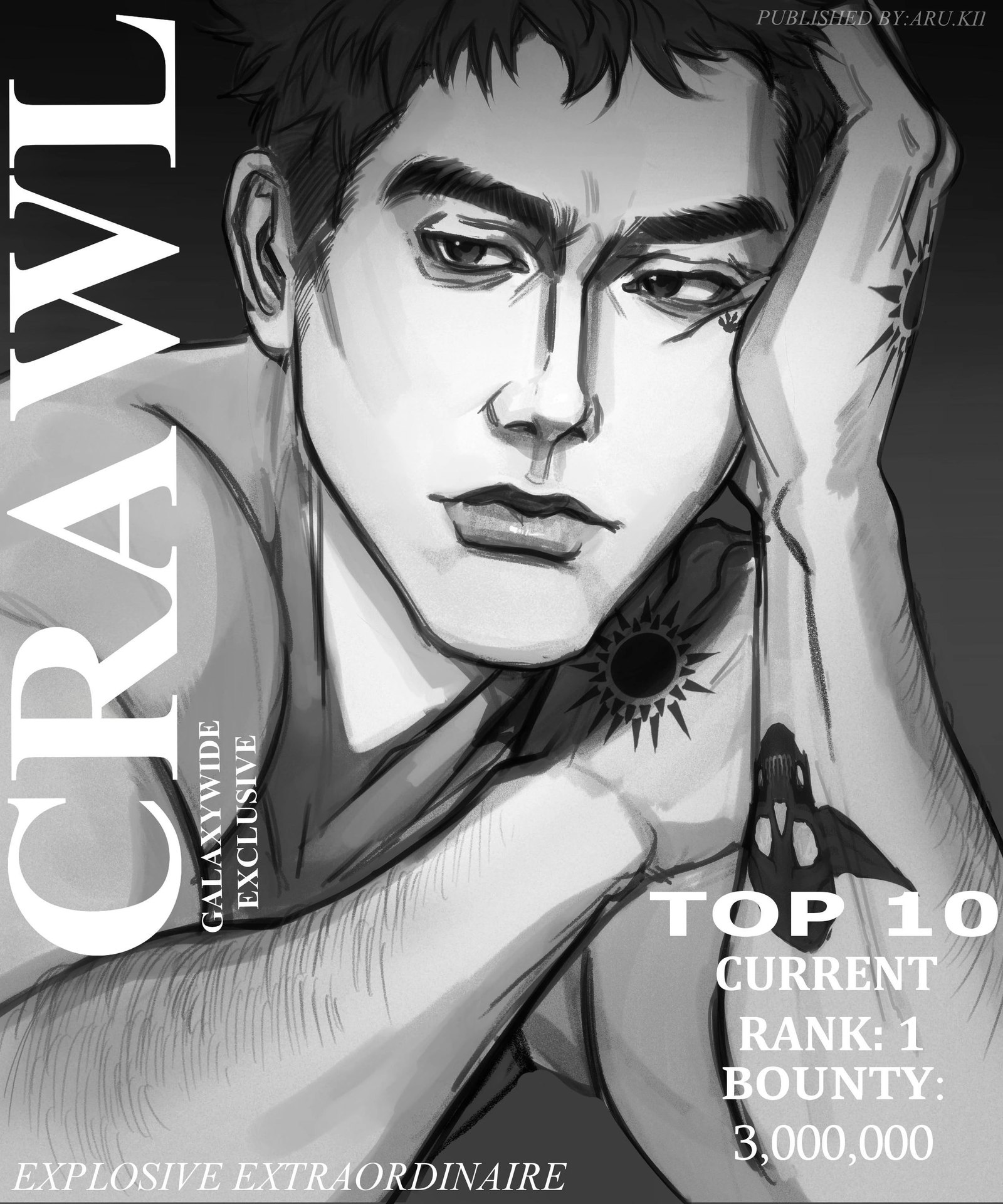
Fan art by kii. Celebrity packaging around a man who hates the packaging.
Fan art by Kippin21. Still barefoot. Still the problem.
What Carl is actually about
Strip the memes and he is a study in agency under spectacle. The crawl rewards people who understand cameras. Carl understands them and still tries to act like a human with obligations. The danger is that the system wants him to become only the explosion. The books keep giving him reasons to stay a person: Donut, Mongo, Mordecai’s exhausted parenting, the friends who treat him like a peer instead of a brand mascot with fists.
That is why the boxers matter beyond the joke. Armor would make him look like every other action property. The stupid underwear keeps saying: this man did not audition. He got drafted by loyalty and bad timing, and he is still choosing who he is while the sponsors rewrite the script in real time.
Quiet beat energy. The crawl still has to let him be a person sometimes.
Carl is the reason civilians who hate LitRPG argue about a guy in heart boxers like he is a real person under contract. He is violence with a conscience, improvisation with a body count, and a class fantasy about surviving television without becoming only television. Donut named the court. Carl named the series. The galaxy cheers for the fireworks. The books keep asking whether the man inside them gets to stay.
Open the book. Listen to Jeff. Watch the cat. The bodyguard is busy.