We grew up on Tony Hawk. Now we just scroll Steam.
Same generation that lived in Skate parks and Skyrim caves now opens Steam, pokes Discord, and goes to bed having played nothing. Games changed. So did we. Neither side is innocent.
Here’s a night I recognize too well. Computer on. Discord open. Steam open. I scroll my library like I’m opening the fridge for the fifth time, hoping dinner magically appeared. I message somebody “you on?” and get “maybe later.” Later never comes. I hover over six games I’ve already installed. I watch a trailer for a seventh. Then I close everything and watch some guy on YouTube play the game I bought two winters ago.
That is adult gaming for a disgusting number of us. Not a halfpipe. Not a raid. Not even a shameful CoD rage session. Just the menu. The list. The soft social ping that dies in the chat.
I grew up on Tony Hawk, Skate, Call of Duty, Skyrim. Millions of people my age did. Those games were not sacred. They were just playable in a way a lot of modern nights aren’t. Something started. Something happened. You went to bed tired for a real reason.
I still call myself a gamer. Mostly I manage a warehouse of unopened fun.
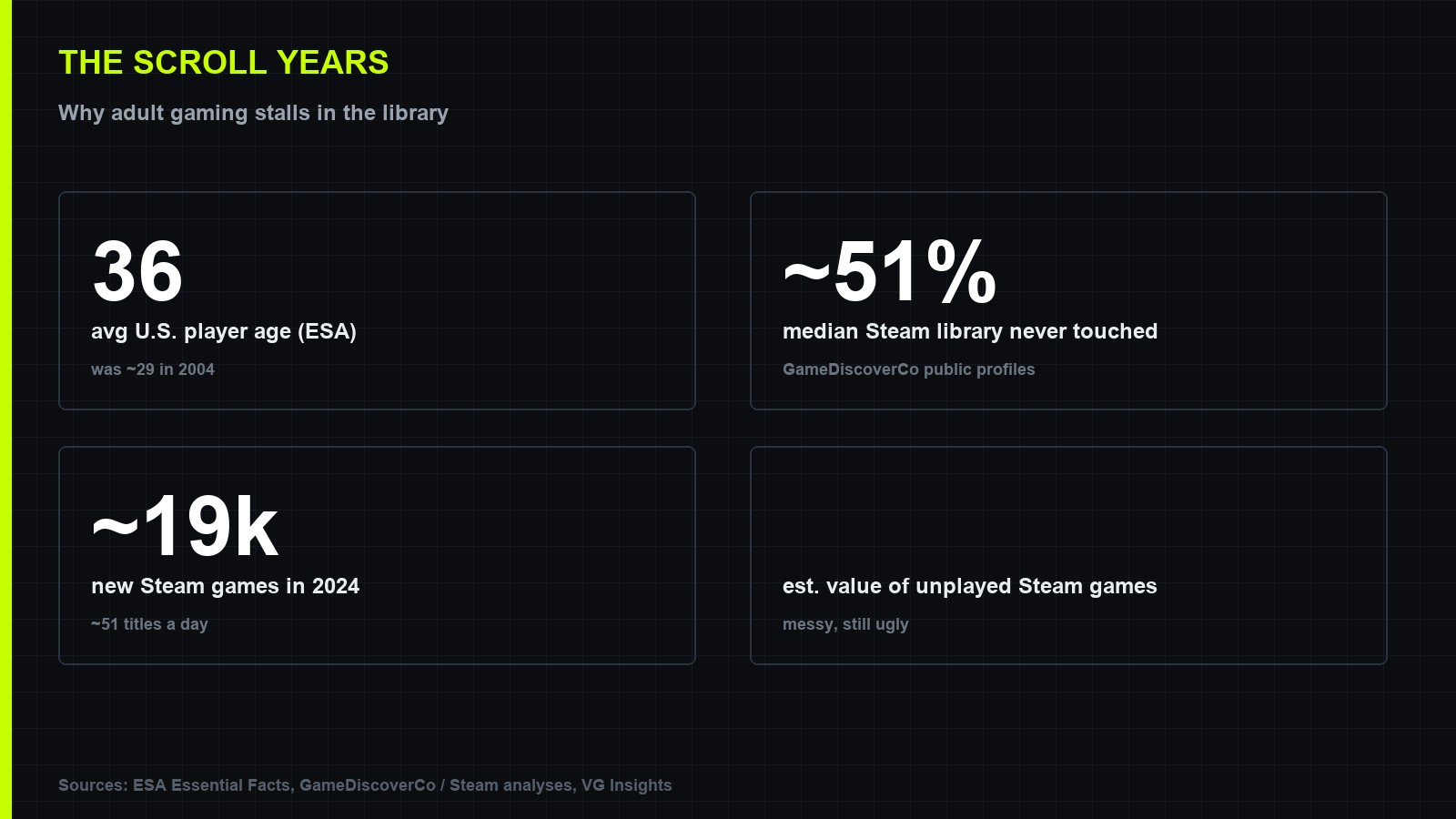
Avg U.S. player age
36
Steam library never touched
~half (median)
New Steam games in 2024
~19,000
Unplayed purchases (est.)
~$19B
ESA on age. GameDiscoverCo on untouched libraries. Steam release tallies for the flood. The $19B unplayed figure is messy extrapolation and still directionally humiliating.
Those games let you disappear
Tony Hawk and Skate did not need a group chat. You dropped in, ate concrete, landed something ugly, chased the next combo. The joy was mechanical. Your hands got better. That was enough.
CoD was louder and dumber and still somehow cleaner than what we do now. People showed up. You died on the same corner until you stopped dying on that corner. When the night ended, it ended because somebody had to go, not because three people couldn’t agree on a genre.
Skyrim was the nuclear option. One person. One mountain. No calendar. You could waste a weekend and the game didn’t punish you for missing a season pass. It just waited.
I’m not pretending 2007 was utopia. I’m saying the product matched the life we actually had: surplus time, surplus friends hanging around being bored, surplus permission to vanish into a disc.
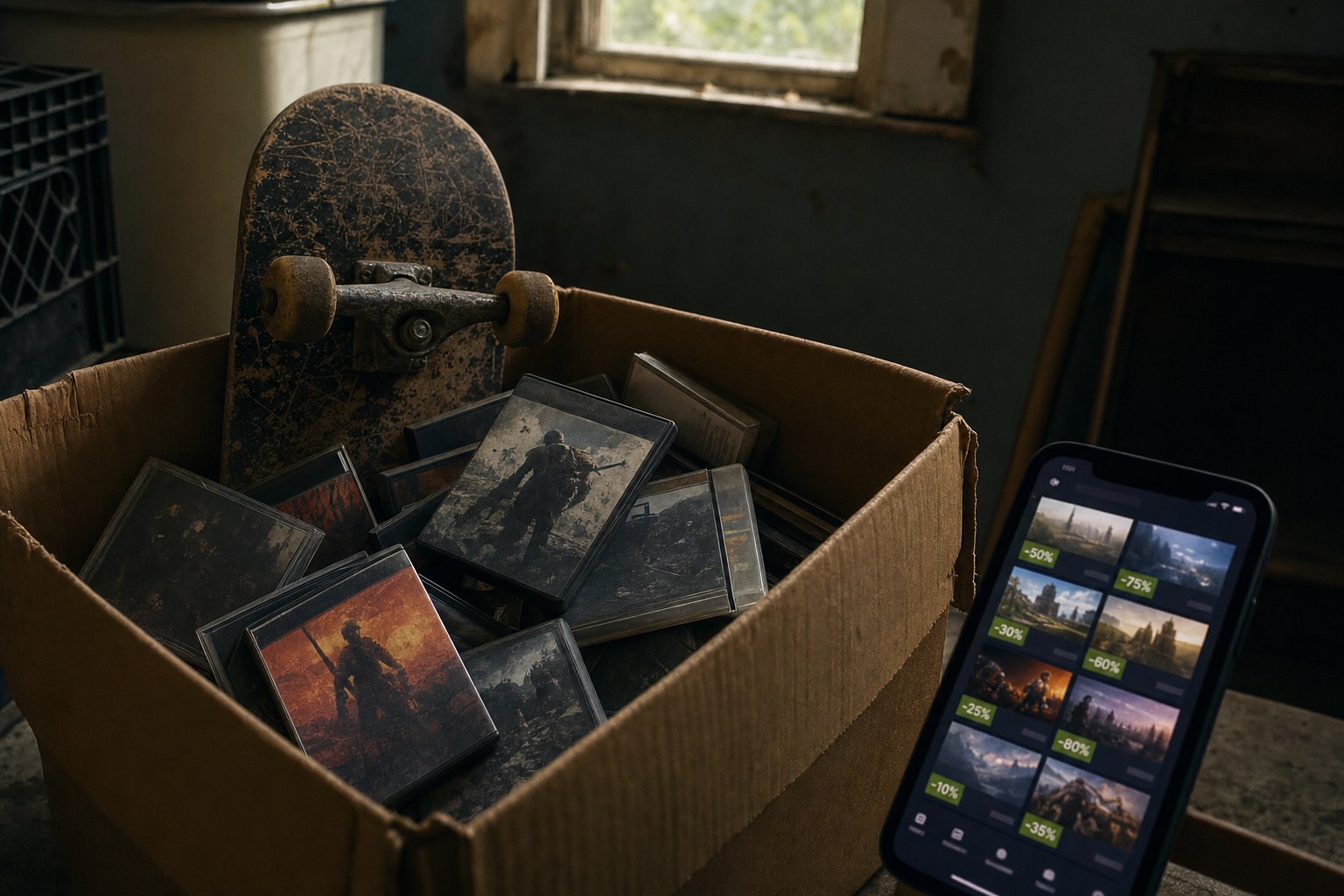
We used to own objects. Now we own obligations with a discount badge.
Then everybody got older and the industry got hungrier
The ESA’s numbers are almost funny if you squint. Average U.S. player age used to sit near 29. Now it’s around 36, with something like 18 years of play behind the average person. That’s us. The kids who learned manuals and shout keys grew jobs, partners, kids of their own, bad knees, and a phone that never shuts up.
Publishers saw the same chart and built products for retention instead of nights. Seasons. Shops. Weekly resets. “Come back or you’re behind.” Free to install, expensive to feel current. Even games you pay sixty or seventy bucks for learned to keep a leash on your calendar.
Live service isn’t evil in theory. It’s evil in practice when your only free block is Thursday 9 to 11 and the game’s idea of respect is a battle pass that expires while you’re covering a shift.
Steam turned buying into the hobby
Valve dumps absurd volume into the catalog. Roughly 18 to 19 thousand new Steam games in 2024. Fifty a day if you want the ugly average. You were never going to finish that. The sales trained a different muscle: purchase the feeling that Future You will finally play something meaningful.
Public Steam profile work from GameDiscoverCo puts the average untouched share around a third, with a median near half never launched. Other surveys put never-opened PC games around a quarter. People wave around a ~$19 billion estimate for unplayed purchases. The methodology is imperfect. The bathroom-mirror version is perfect: you own more games than you have years left to clear them at your current pace.
So of course you scroll. The library is where intention goes to look busy.
This is the real screenshot of our thirties. Not a match. A maybe.
The actual ritual
Nobody I know sits in a Steam lobby all night. That’s not the disease.
The disease looks like this:
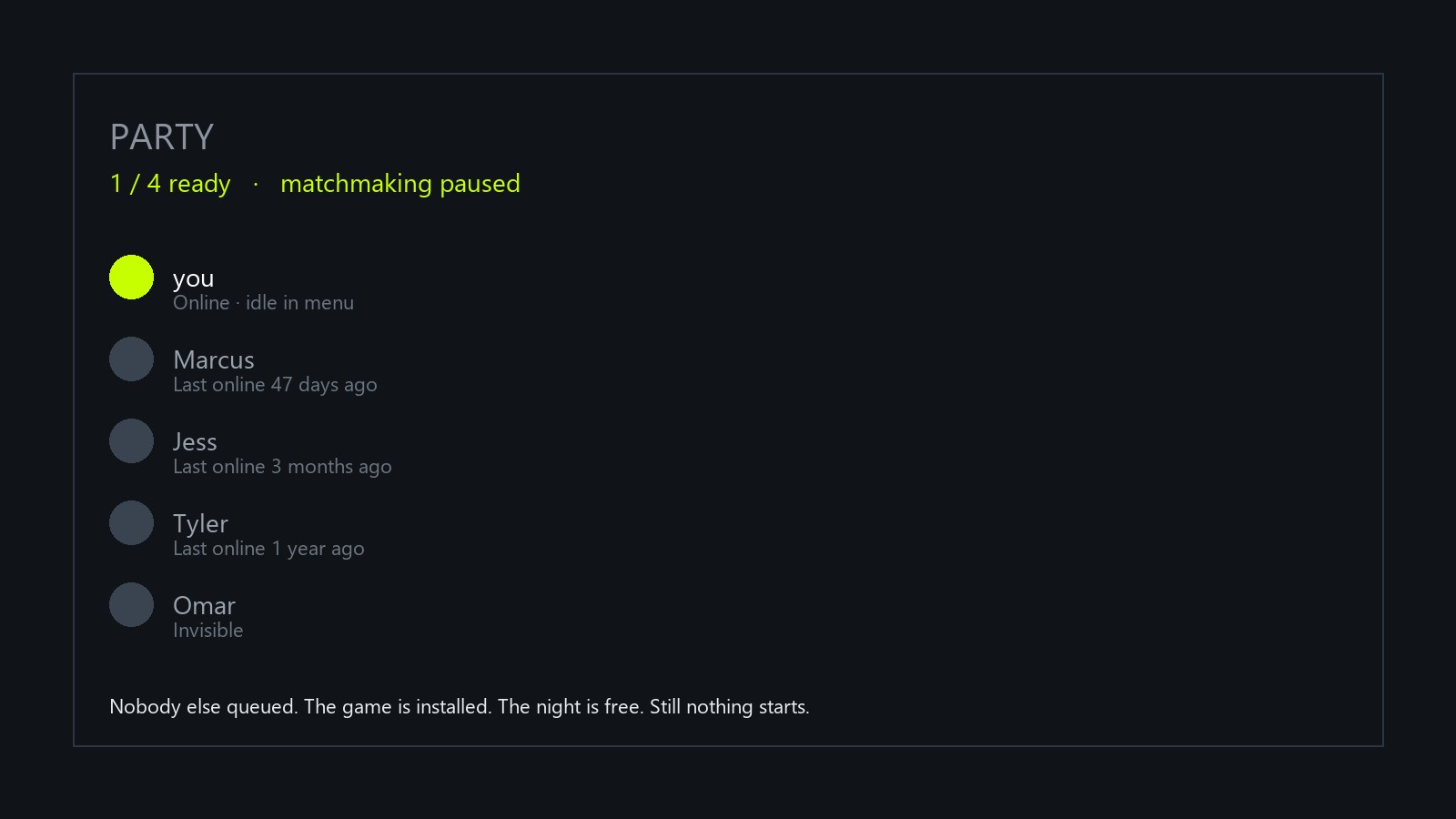
You open Steam because opening Steam feels like starting. You check who’s green. Half of them are “online” while watching Netflix. You bounce to Discord and type the coward’s question: you on?
If two people answer, you still spend twenty minutes arguing between a shooter, a survival crafting time sink, and “something chill.” By the time you agree, one person is tired and another already launched something solo out of spite.
If nobody answers, you scroll the library again. You read reviews for a game you bought on sale because a YouTuber said it was peak. You almost boot it. Then you remember it’s a 60-hour RPG and you have work in the morning, so you watch someone else finish the part you wanted.
That’s the night. Not tragic. Just hollow in a way Tony Hawk never was.
Multiplayer didn’t die. Showing up did.
High school quorum was free. Somebody was always bored enough to play whatever. At 29 or 34, quorum is a project. Jobs. Partners. Energy debt. The quiet knowledge that tomorrow is a weekday and your body keeps receipts.
A lot of modern multiplayer is built like it still has high school attendance. Miss a week, feel poor. Miss a season, feel stupid. Miss a month, uninstall. So people wait for the perfect window with the perfect group for the perfect game… and the window closes while Discord stays open.
Solo games should’ve won by default. Sometimes they do. Then the same brain that can’t start Elden Ring alone also can’t start it because the library is screaming about the other 300 options.
Choice didn’t free us. It just gave us a prettier way to stall.
The industry is fine. Your nights aren’t.
Americans still dump tens of billions into this category. The business is not collapsing. Your personal relationship with it just got weird. Expensive. Strangely joyless for people who once treated a controller like oxygen.
Big single-player games still ship that are better than half the stuff we grew up defending. That almost makes it worse. Masterpieces rotting under a discount tag next to a free-to-play time vampire you resent and still reinstall.
Call of Duty can miss a cycle and still print money somewhere. Your Thursday still ends in a blank screen. Aggregate revenue does not care that Marcus hasn’t been actually joinable since February.
What I think we lost
We lost the stupid ease. Press start. Fall down. Try again. No meeting.
We lost endings that fit a school night. We lost the feeling that buying a game meant the game was yours, not a temporary lease on a content calendar.
We gained better graphics, infinite catalogs, Discord, wishlists, and a permanent low-grade shame about “getting through the backlog.” Backlog. Listen to that word. We turned play into inventory management.
If you want a night back
I’m not writing a detox plan. I’m saying the only things that have ever worked for me are ugly and small.
Pick the game before you open Steam. Decide at lunch. Night-you is a liar and a sale addict.
Treat solo nights as real nights. Skyrim understood this. Your ego is the part that thinks play only counts if three friends witness it.
If you need people, put a recurring block on the calendar like adults who want to keep a band practice alive. “You on?” is how plans die.
Finish something short on purpose. A small complete game rewires the brain that only knows seasons and FOMO.
Hide the unplayed. Wishlist is not a personality. It’s a graveyard with a cart button.
Anyway
Games aren’t the same as they were ten years ago because we aren’t, and the roadmap noticed first. The hits of our youth assumed surplus time. A lot of the hits of our adulthood assume you’ll keep logging in even when your life has already spent the good hours elsewhere.
So yeah. Millions of people who grew up grinding Tony Hawk lines, skating digital streets, camping CoD corners, and getting lost in Skyrim now open Steam, scroll like idiots, ping a group chat, and go to sleep having played nothing.
That’s not a moral failure. It’s what you get when a decade of “games as a service” meets a generation that just wanted a place to go after dark.
Close the store page. Boot one thing. Play until something happens. Or admit you miss the halfpipe and go find a version of fun that doesn’t need four calendars and a group vote.
Numbers cited above lean on ESA Essential Facts, GameDiscoverCo library analyses (via Two Average Gamers), and Steam release tallies from VG Insights / Game World Observer. They’ll move. The fridge-scroll won’t.